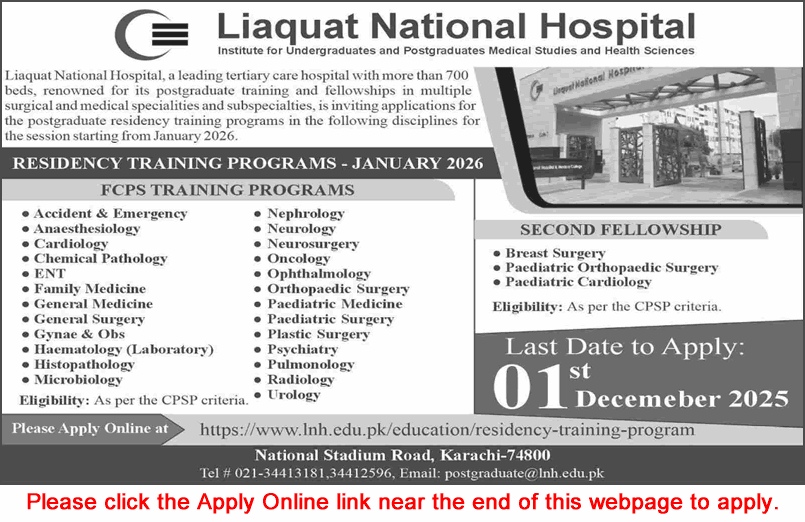
Liaquat National Hospital & Medical College (LNH), one of Pakistan’s most prestigious and leading tertiary care hospitals, has announced its FCPS Residency Training Programs for November 2025. This comprehensive program is designed for ambitious medical graduates who aspire to enhance their clinical skills, pursue specialization, and gain advanced training under experienced faculty in a modern hospital environment.
These programs include a wide range of specialties under the FCPS training framework as well as opportunities for Second Fellowship programs. Candidates across Pakistan can apply online to join one of the most recognized medical training institutions in the country.
Introduction to Liaquat National Hospital & FCPS Residency Programs
Liaquat National Hospital, located in Karachi, Sindh, is widely respected for its high-quality medical services, advanced healthcare facilities, and strong academic programs. The hospital has consistently been a top choice for medical graduates seeking postgraduate training due to its clinical exposure, structured academic curriculum, and expert faculty.
The FCPS Residency Program at LNH is structured according to the College of Physicians and Surgeons Pakistan (CPSP) guidelines, ensuring that trainees receive comprehensive theoretical and practical knowledge. These programs are aimed at producing competent specialists who can contribute effectively to Pakistan’s healthcare sector.
Why Choose LNH for FCPS Training?
Medical graduates face numerous options for FCPS residency programs, but Liaquat National Hospital offers distinct advantages:
-
Extensive Clinical Exposure: LNH has a high patient influx across multiple specialties, allowing residents to gain hands-on experience in diverse clinical cases.
-
Experienced Faculty: The hospital employs highly qualified consultants and senior specialists who guide residents through practical and academic learning.
-
Advanced Facilities: Modern operating theaters, intensive care units, emergency services, and diagnostic labs provide a professional environment for learning.
-
Structured Curriculum: Academic sessions, journal clubs, case presentations, and continuous assessments ensure structured learning.
-
National Recognition: LNH is affiliated with CPSP, providing residents with nationally recognized FCPS certification.
-
Career Opportunities: Completing FCPS training from LNH enhances future employment prospects in hospitals, academic institutions, and private practice.
Available FCPS Training Programs – November 2025
LNH offers FCPS Residency in a broad range of medical and surgical specialties. These programs are carefully designed to equip trainees with in-depth knowledge and hands-on skills in their chosen field.
1. Accident & Emergency
The A&E program trains residents to handle trauma, medical emergencies, and surgical emergencies efficiently. Residents are exposed to patient triage, resuscitation, emergency procedures, and rapid decision-making.
2. Anesthesiology
Training focuses on anesthesia administration, ICU management, perioperative care, pain management, and airway control. Residents gain expertise in operating room procedures and critical care scenarios.
3. Cardiology
Cardiology trainees develop skills in diagnosing and managing cardiovascular diseases, performing ECGs, echocardiography, cardiac catheterization, and handling cardiac emergencies.
4. Chemical Pathology
Residents in chemical pathology learn laboratory techniques, biochemical testing, and correlation of lab results with clinical conditions for accurate diagnosis.
5. ENT (Otolaryngology)
ENT residents handle ear, nose, and throat disorders, including diagnostic procedures, surgical interventions, and emergency management of ENT cases.
6. Family Medicine
This program emphasizes primary care, preventive medicine, and community health, preparing residents to manage outpatient clinics and public health initiatives.
7. General Medicine
The General Medicine program trains residents to manage complex internal medicine cases, develop diagnostic skills, and provide patient-centered care.
8. General Surgery
Surgery residents gain exposure to elective and emergency surgical procedures, pre- and post-operative care, and surgical decision-making.
9. Gynecology & Obstetrics
This specialty includes training in antenatal care, labor management, gynecological surgeries, and emergency obstetric scenarios.
10. Hematology
Hematology residents learn about blood disorders, laboratory testing, transfusion medicine, and clinical hematology practices.
11. Histopathology
This program focuses on tissue examination, biopsy analysis, cytology, and diagnostic pathology interpretation.
12. Microbiology
Microbiology residents gain expertise in identifying infectious agents, laboratory diagnostics, and infection control.
13. Nephrology
Nephrology training includes managing renal diseases, dialysis, transplant care, and handling acute and chronic kidney conditions.
14. Neurology
Neurology residents manage a variety of neurological disorders, including strokes, seizures, neuropathies, and neurodegenerative diseases.
15. Neurosurgery
This program offers surgical exposure in brain and spinal procedures, neurosurgical emergencies, and critical care for neurosurgical patients.
16. Oncology
Residents in oncology learn cancer diagnosis, chemotherapy management, and multidisciplinary treatment planning.
17. Ophthalmology
Ophthalmology training includes eye surgeries, cataract procedures, glaucoma management, and ocular emergencies.
18. Orthopedic Surgery
Orthopedic residents gain practical experience in trauma, fractures, joint replacements, and musculoskeletal disorders.
19. Pediatric Medicine
This program provides training in neonatology, pediatric emergencies, outpatient management, and specialized pediatric care.
20. Pediatric Surgery
Residents are trained in pediatric surgical procedures, congenital anomalies, and emergency pediatric surgeries.
21. Plastic Surgery
Plastic surgery residents learn reconstructive and cosmetic surgical techniques, burn care, and trauma reconstruction.
22. Psychiatry
This program focuses on mental health, psychotherapy, counseling, and management of psychiatric disorders.
23. Pulmonology
Pulmonology training includes respiratory disease management, bronchoscopy, and pulmonary critical care.
24. Radiology
Radiology residents gain expertise in X-rays, CT scans, MRI, ultrasound, and interventional radiology techniques.
25. Urology
Urology training covers renal and urinary tract surgeries, endoscopic procedures, and clinical management of urological conditions.
Second Fellowship Programs
In addition to standard FCPS training, LNH offers Second Fellowship programs for advanced specialization:
-
Breast Surgery: Advanced training in breast cancer surgeries, diagnostics, and multidisciplinary care.
-
Pediatric Orthopedic Surgery: Focused training in congenital deformities, pediatric trauma, and corrective surgeries.
-
Pediatric Cardiology: Specialized exposure to congenital and acquired heart diseases in children, diagnostic techniques, and intervention planning.
These fellowships provide opportunities for super-specialized training for candidates seeking advanced expertise.
Eligibility Criteria
Applicants must meet CPSP requirements for FCPS training:
-
MBBS Degree from a recognized medical college
-
PMDC/PMC Registration
-
Completion of house job in relevant specialties
-
Demonstrated interest in chosen specialty
-
Strong communication, teamwork, and professional ethics
Preference is often given to candidates with prior clinical experience, research work, or higher academic achievements.
Application Process – How to Apply Online
-
Visit the LNH official website or CPSP online portal.
-
Select the desired FCPS or Second Fellowship program.
-
Complete the online application form with accurate personal, educational, and professional details.
-
Upload required documents: CNIC, MBBS certificate, house job certificate, and relevant experience letters.
-
Submit the application before the closing date.
Shortlisted candidates will be contacted for written tests, interviews, or skill assessments. Only complete applications will be considered.
Benefits of FCPS Training at LNH
-
Hands-on Clinical Exposure: Treat real-life cases under supervision.
-
Academic Development: Participate in seminars, case discussions, journal clubs, and workshops.
-
Career Growth: Completion of FCPS opens doors to teaching positions, consultancy, and private practice.
-
Professional Recognition: Nationally recognized training under CPSP.
-
Skill Development: Learn advanced diagnostic, surgical, and clinical skills.
Why FCPS Residency is Crucial for Medical Graduates
The FCPS (Fellowship of the College of Physicians and Surgeons Pakistan) is considered one of the most respected postgraduate qualifications in Pakistan. Benefits include:
-
Specialization in a chosen medical or surgical field
-
Enhanced credibility and employment prospects
-
Eligibility for teaching, consultancy, and senior hospital positions
-
Exposure to high standards of clinical practice and research
Choosing a program like LNH ensures rigorous training in a professional and supportive environment.
Conclusion
The Liaquat National Hospital FCPS Residency Training Program November 2025 is an exceptional opportunity for medical graduates seeking comprehensive postgraduate training in a wide range of specialties. With programs in medical, surgical, and super-specialized fellowships, LNH provides structured learning, modern facilities, and expert mentorship.
Applicants from across Pakistan are encouraged to apply online, ensuring their place in one of the country’s most reputable medical training institutions. A residency at LNH not only equips graduates with advanced clinical skills but also enhances their long-term career prospects in the medical field.
SEO Keywords for Optimization:
Liaquat National Hospital FCPS Residency, LNH FCPS November 2025, FCPS Residency Karachi, FCPS Training Programs Pakistan, Medical Residency Karachi, CPSP FCPS Training, LNH Second Fellowship Programs